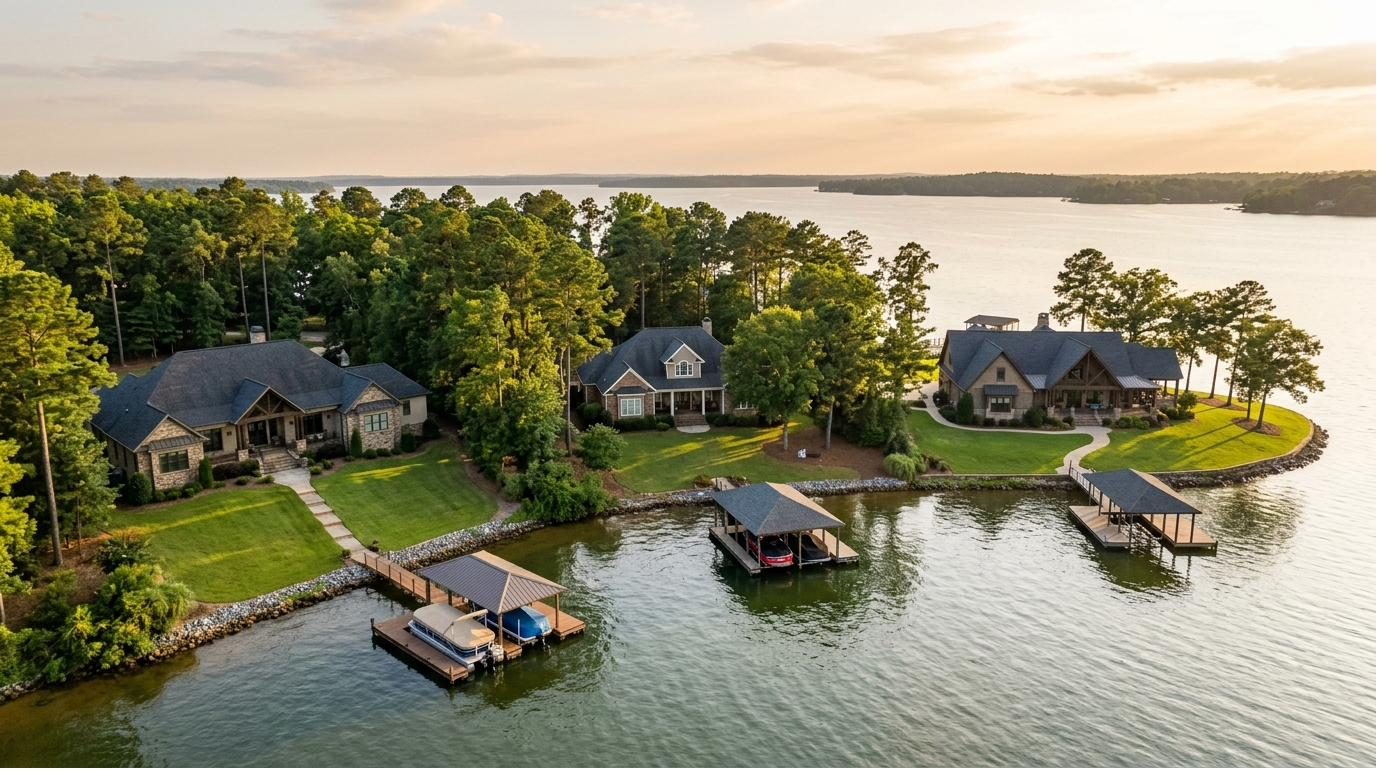
- Who manages the shoreline, and why permits matter
- Depth at full pool and at winter drawdown
- How coves and exposure move the price
- My pre-purchase checklist for any waterfront home
Lake Murray is about fifty thousand acres with roughly six hundred and fifty miles of shoreline, and the shoreline is where waterfront value is made or lost. A few things every buyer should understand.
The shoreline is managed
Dominion Energy operates the lake and manages its shoreline under a shoreline management program. Docks, lifts and most shoreline work require a permit under that program. A dock without a valid permit, or one that doesn't match what was permitted, is a problem that becomes yours at closing unless you catch it first.
Depth is everything
The lake is typically drawn down in winter, so a dock with comfortable depth in June can be shallow in January. Ask what the depth is at the end of the dock at full pool and at drawdown, and whether the cove holds water in a dry summer. Distance to the main channel matters too: a long, shallow idle out changes how often a boat gets used.
Exposure and the cove
Sunset views and open-water views carry premiums. Protected coves trade some view for calmer water and less wake. Neither is better; know which you're buying.
What I check
Permit status and transferability. Any pending shoreline applications. Dock condition and lift capacity. Depth at full pool and at drawdown. Erosion and shoreline stabilization. Insurance costs specific to waterfront. And the character of the cove itself, which I'll show you from the water.
For sellers
Have the permit in hand before listing, fix what a buyer's inspector will find on the dock, and market the water as carefully as the house: drone, from-the-water and twilight video are how lake buyers decide which homes to see.
General information, not advice for your specific situation. I'll tell you when a question needs a lawyer, a CPA or a lender, and point you to a good one.