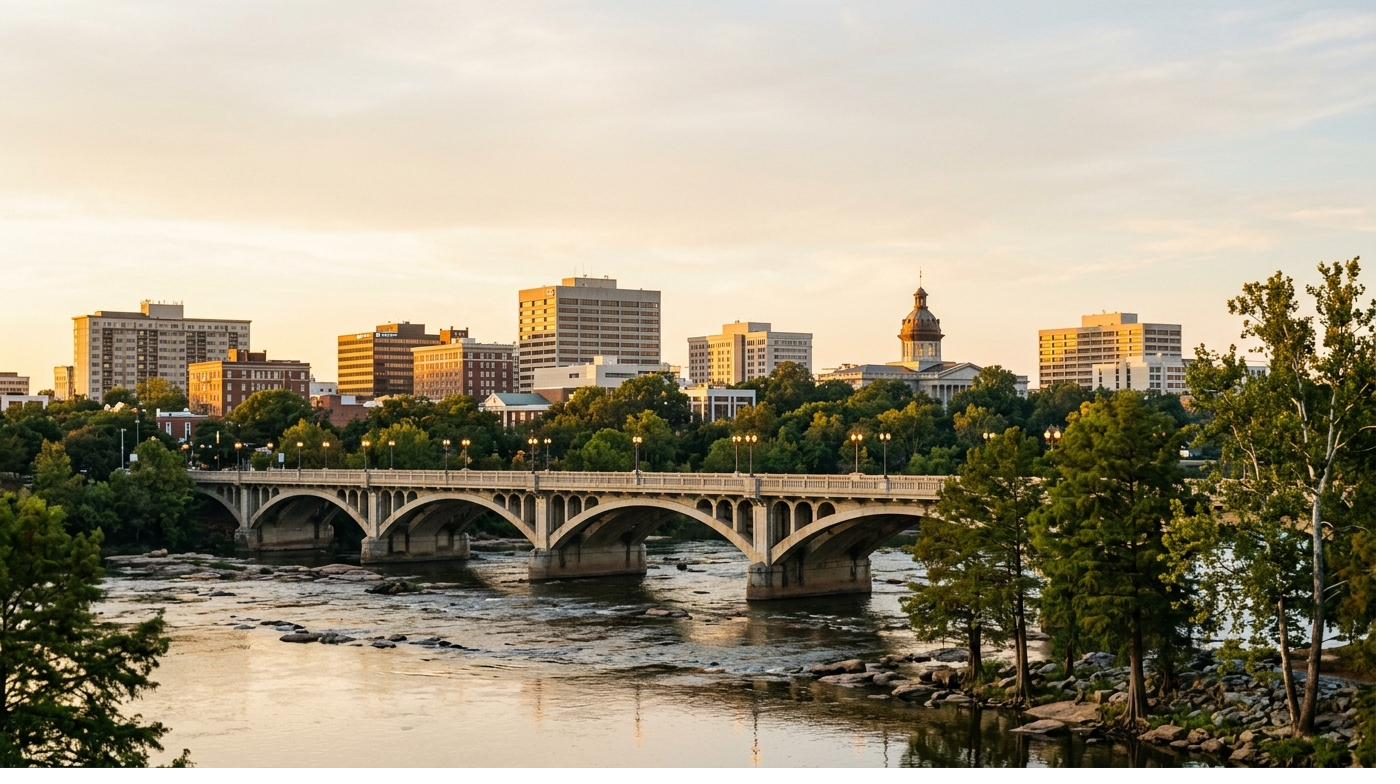
- Where people live, neighborhood by neighborhood
- How commutes really work here
- How to check school zones for any address
- Making one house-hunting trip count
Columbia rewards people who understand it quickly. It's a state capital and a university town, with a large medical sector, a major Army post, and suburbs that stretch to a lake. Here is the shape of it.
Where people live
In-town, the older neighborhoods are the draw: Shandon and Rosewood for bungalows, sidewalks and big trees; Forest Acres for slightly larger homes and its own small-town feel; Elmwood Park and Earlewood for character at a friendlier price. Downtown, the Vista and Main Street offer condos and walkability. West of the river, Lexington and Irmo bring newer construction, bigger lots, strong schools and a straight drive to Lake Murray. North and east, Blythewood and the Northeast offer newer neighborhoods near the interstates.
Commutes
Shorter than most cities, with predictable pinch points on I-26 and I-20 at rush hour and on the bridges into downtown. Where you work matters more than where you live: Prisma Health and the university sit near the center; Lexington Medical Center is on the west side; Fort Jackson is east. I'll tell you which neighborhoods make your specific drive easy.
Schools
Several districts serve the area, including Richland One, Richland Two, Lexington One and Lexington-Richland Five, and each draws its own attendance zones, which change. Never rely on a listing's claim; map the address to the district's current zone yourself, or have me do it for every home on your list.
Making one trip count
Most relocations get a single house-hunting visit. I send video tours of the shortlist before you fly, book the showings in a sensible route, line up the lender and inspector in advance, and handle closing logistics if you're already gone. One plan, one person, no surprises.
General information, not advice for your specific situation. I'll tell you when a question needs a lawyer, a CPA or a lender, and point you to a good one.